Choosing cleaning products for a home with a baby can feel confusing. Parents want the home to be clean, but they also do not want strong fumes, harsh residues, or unnecessary chemicals around a newborn or crawling infant. Product labels can make the decision harder because many cleaners use words like “natural,” “green,” “baby-safe,” “non-toxic,” or “gentle,” but those words do not always tell the full story. A safer cleaning routine is not about trusting the prettiest label. It is about understanding what needs to be cleaned, when disinfecting is actually needed, how products are used, and how to keep babies away from wet chemicals and stored supplies.
The safest cleaning products for baby homes are usually simple, clearly labeled, fragrance-free when possible, used according to directions, and stored securely. In many everyday situations, soap, water, detergent-based cleaners, microfiber cloths, and regular dust control do more than parents realize. Strong disinfectants are sometimes needed, especially after illness, diaper messes, raw food handling, or contamination, but they should not be sprayed everywhere every day without a reason. Families can begin with home safety basics and build a cleaning routine that keeps the home safer without overwhelming the air, surfaces, or storage spaces.
Clean First, Disinfect Only When Needed
One of the most important safety principles is knowing the difference between cleaning and disinfecting. Cleaning removes dirt, crumbs, dust, spills, and many germs from surfaces. Disinfecting uses chemicals to kill germs. The CDC explains that in most situations, cleaning alone with soap and water can remove germs, while disinfection is needed when someone has been sick or when certain higher-risk surfaces require it. Parents can review the CDC’s official guidance on cleaning and disinfecting for a clear overview.
This matters in a baby home because overusing disinfectants can add unnecessary fumes and residues. A play mat that only has dust and crumbs may need cleaning, not heavy disinfection. A high chair tray after a normal snack may need washing with soap and water. A diaper-changing surface after a messy diaper may need more careful cleaning and, depending on the surface and situation, disinfecting. The safest routine is not the strongest chemical every time. It is the right level of cleaning for the real risk.
Choose Fragrance-Free or Low-Odor Products When Possible
Fragrance is one of the biggest reasons cleaning products feel irritating in small homes. Scented sprays, plug-ins, candles, heavy laundry perfumes, and strong bathroom cleaners can make a room smell “clean,” but scent is not the same as cleanliness. Babies do not need a room that smells like lemon, pine, lavender, or perfume. In fact, strong scents can make indoor air feel heavier, especially in small apartments, nurseries, bathrooms, and bedrooms.
When possible, choose fragrance-free or low-odor products for surfaces near the baby. This is especially useful for floors, high chairs, changing areas, toys, nursery furniture, and bath spaces. Avoid spraying cleaners in the air or near the baby. If a product has a strong smell, use it only with ventilation and keep the baby away until the surface is dry and the smell has cleared. A baby home can smell neutral and still be clean.
Look for EPA Safer Choice Products
Parents who want a more reliable way to compare everyday cleaning products can look for the EPA Safer Choice label. The EPA explains that Safer Choice helps consumers find products that perform and contain ingredients that are safer for human health and the environment. Parents can use the EPA’s official Safer Choice program as a starting point when comparing cleaners, hand soaps, laundry products, and other household products.
This does not mean every product with a nice-looking label is safer, and it does not mean parents should stop reading directions. It means the product has gone through a specific EPA program for safer ingredient review. In a baby home, this can be especially helpful for everyday cleaning products used often. Parents should still choose the right product for the task, use the correct amount, avoid mixing products, and store everything out of reach.
Be Careful With Disinfectants
Disinfectants can be useful, but they require more caution than basic cleaners. A disinfectant may need a specific contact time, meaning the surface must stay wet for a certain number of minutes to work properly. Some products require rinsing after use, especially on food-contact surfaces or baby items. Some should not be used around children until dry. Parents should always read the product label, follow directions, and avoid using disinfectants on surfaces or toys that the label does not allow.
HealthyChildren.org, the parenting site from the American Academy of Pediatrics, notes that if sanitizing or disinfecting is needed, safer active ingredients can include hydrogen peroxide, citric acid, L-lactic acid, and ethanol, and it reminds families to choose products carefully. Parents can review its guide to choosing safer cleaning products. In daily life, disinfectants should be treated as tools for specific situations, not as a constant room spray.
Never Mix Cleaning Products
One of the most important rules in any home is never mix cleaning products. Bleach should not be mixed with ammonia, vinegar, acids, toilet cleaners, or other products. Mixing chemicals can create dangerous fumes. Even products that seem ordinary can react in unsafe ways. Parents should use one product at a time, follow the label, and rinse or clean as directed before using anything else.
This rule matters even more in small homes where fumes can build quickly. If a bathroom or kitchen has poor ventilation, chemical smells may linger. Keep the baby out of the area while cleaning with stronger products, open windows if safe, run a fan when appropriate, and wait until surfaces are dry and fumes are gone before bringing the baby back. Safe cleaning is about process, not just product choice.
Use Soap and Water More Often Than You Think
Soap and water are underrated in baby homes. Many spills, crumbs, sticky marks, and everyday messes can be handled with warm water, mild soap, and a clean cloth. Floors, high chairs, toys, and changing surfaces often need regular cleaning more than dramatic chemical treatment. For washable toys, follow the manufacturer’s instructions and clean them based on how they are used. Toys that go in the mouth may need more frequent washing than toys that stay on a shelf.
Families can reduce product clutter by keeping a few simple supplies: mild dish soap, fragrance-free detergent, microfiber cloths, a mop, a small brush for crevices, and a disinfectant for situations that truly need it. This kind of simple cleaning kit is often safer and easier to manage than a cabinet full of specialty sprays. It also supports a low-clutter home, which is helpful once babies begin crawling.
Choose Safer Laundry Products
Baby laundry can become a major part of household cleaning. Clothes, burp cloths, crib sheets, sleep sacks, towels, washcloths, and changing pad covers may all need frequent washing. Parents often wonder whether they need a special baby detergent. Not always. Many families do well with a fragrance-free, dye-free detergent that works for sensitive skin, but every baby is different.
Strongly scented laundry products, fabric softeners, and dryer sheets may bother some babies or add fragrance to the sleep space. Parents can start simple and watch for skin reactions. Wash baby textiles before first use, especially hand-me-downs or items stored for a long time. Store clean baby laundry away from dust, bathroom moisture, and strong scents. A clean crib sheet matters, but the sleep space should still remain free of loose blankets, pillows, and soft items. Families can review safe sleep guidance when choosing what belongs in the crib.
Clean Floors With Crawling in Mind
Once a baby starts rolling and crawling, the floor becomes one of the most important surfaces in the home. Babies touch the floor, then put hands in their mouths. They find crumbs, dust, hair, and tiny objects adults miss. The safest floor cleaning routine is consistent and simple. Vacuum or sweep up debris, then damp mop hard floors. For rugs, vacuum slowly and regularly, especially in play areas.
Avoid leaving wet cleaning product on the floor where a baby may crawl. Let floors dry fully before placing the baby back on them. If using a floor cleaner, choose one appropriate for the surface and use it according to label directions. In homes with infants, it is often better to clean more frequently with gentler methods than to use strong products occasionally and leave heavy residue.
Keep Cleaning Products Locked Away
Product choice matters, but storage matters just as much. Even safer cleaners should not be accessible to babies or toddlers. Store cleaning products high, locked, or behind child-resistant cabinet locks. Keep products in their original containers with labels intact. Never pour cleaning products into drink bottles, food containers, or unlabeled spray bottles. This can lead to dangerous mistakes.
Small apartments often have limited storage, so cleaners may end up under the kitchen sink, in a bathroom cabinet, or beside laundry supplies. These areas should be secured before the baby crawls. If there is no safe low cabinet, use a high shelf or locked bin. Families can review product safety recalls as part of a broader habit of checking household safety items, labels, and storage systems.
Be Careful With “Natural” Labels
“Natural” does not automatically mean safe for babies. Essential oils, strong plant extracts, vinegar sprays, scented cleaners, and homemade mixtures can still irritate skin, eyes, or airways. Some homemade cleaning recipes are mild, while others can be unsafe if mixed incorrectly or used on the wrong surface. Parents should not assume that a product is safer only because it sounds natural.
A better approach is to look for clear ingredients, reputable labels, low fragrance, and instructions that make sense. If a product does not say where it can be used, how long it should sit, whether it should be rinsed, or how to store it, parents should be cautious. Baby homes need clarity more than trendy language. The safest product is one parents can understand and use correctly.
Separate Cleaning From Feeding Areas
Feeding areas need extra care because bottles, nipples, formula tools, pacifiers, and high chair trays come into contact with the baby’s mouth. Cleaning products should not be stored or sprayed near clean feeding supplies. If the kitchen is small, use a dedicated bin or drawer for bottles and feeding tools. Keep dish soap, disinfectants, and sprays away from bottle parts and formula containers.
Families preparing formula or cleaning bottles can review feeding and formula safety for safer routines. Food-contact surfaces should be cleaned carefully, and any disinfectant used on them should be allowed, applied, and rinsed according to the label. A cleaner feeding station is not about using more chemicals. It is about keeping supplies organized, washed, and protected from contamination.
Clean Bath Areas Without Overusing Harsh Products
Bathrooms can require stronger cleaning than other rooms because of moisture, soap residue, toilets, and mildew. But harsh bathroom sprays can be intense in small spaces. When cleaning a baby bath area, use good ventilation, keep the baby out of the room, and allow surfaces to dry fully before bath time. Rinse surfaces well if the product label requires it, especially in areas where the baby’s skin may touch.
Parents can reduce bathroom cleaning problems by drying wet areas, hanging towels properly, emptying baby tubs after use, and cleaning bath toys according to instructions. Mold and mildew grow more easily where moisture stays. Families can review bath and hygiene safety to build routines that keep bath time safer without turning the bathroom into a chemical-heavy space.
Use Ventilation as Part of Cleaning
Ventilation is a key part of safer cleaning. Open a window when safe, use an exhaust fan, or clean when the baby is in another room. This is especially important with stronger products, bathroom cleaners, disinfectants, or anything with a noticeable smell. In small rooms, cleaning vapors can concentrate quickly.
Ventilation does not replace safe product selection, but it helps reduce exposure during cleaning. Parents should also avoid spraying products directly into the air. Spray onto a cloth when the label allows, or use non-spray products when possible. A cleaner home should not leave the air feeling heavy or irritating.
When Disinfecting Makes Sense
Parents do not need to disinfect every surface every day. Disinfecting makes more sense after illness, diaper leaks on hard surfaces, contact with bodily fluids, raw meat preparation, or certain bathroom messes. High-touch surfaces may need more attention when someone in the home is sick. Always clean visible dirt first, then disinfect if needed. Dirt and residue can make disinfectants less effective.
Follow the label’s contact time and safety instructions. Keep babies and pets away while the surface is wet. Rinse food-contact or mouth-contact items if required. Let surfaces dry before use. If a product feels too harsh for everyday use, it may still be useful for specific situations, but not as the default cleaner for every baby surface.
A Simple Baby-Home Cleaning Kit
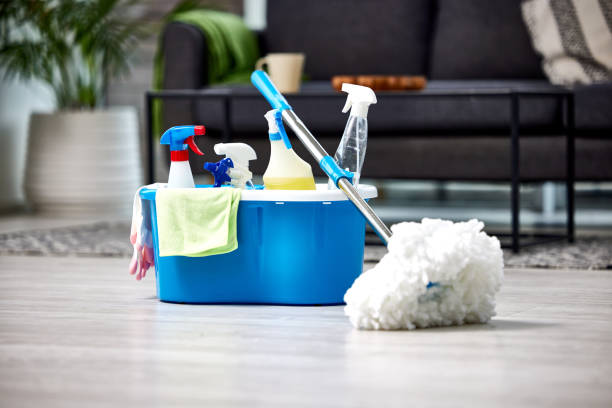
A safer cleaning kit for many baby homes can be simple: fragrance-free dish soap, fragrance-free laundry detergent, microfiber cloths, a mop, a vacuum with a good filter if possible, a gentle all-purpose cleaner, and one appropriate disinfectant for higher-risk situations. Some families may add baking soda for certain non-disinfecting cleaning tasks, but it should still be used carefully and kept away from children.
The point is not to own every safer product available. The point is to have a small number of products that are easy to understand and use correctly. Too many bottles under the sink increase clutter and confusion. A simpler kit makes it easier for every caregiver to follow the same routine.
The Bottom Line
The safest cleaning products for baby homes are not always the strongest or the most heavily marketed. They are products that are appropriate for the task, clearly labeled, low-fragrance when possible, used according to directions, and stored securely. In many situations, soap, water, regular cleaning, and dust control are enough. Disinfectants have a place, but they should be used carefully and only when the situation calls for them.
Parents can protect babies by cleaning regularly, reducing dust, avoiding strong scents, ventilating during cleaning, keeping chemicals locked away, and separating cleaning products from feeding supplies. A safe cleaning routine should make the home healthier without adding unnecessary fumes, residues, or clutter. The goal is not a sterile home. The goal is a clean, practical, baby-conscious home where safety and everyday life can work together.