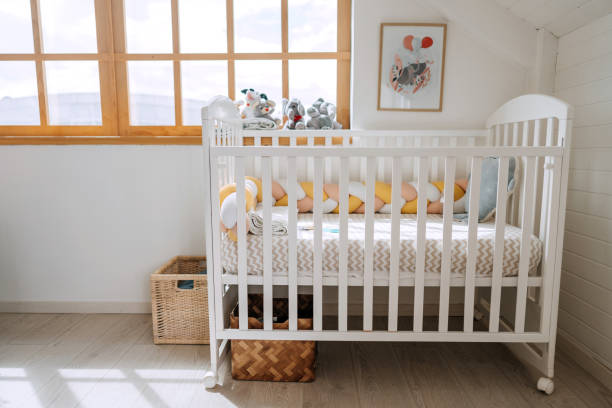
Setting up a newborn space in a tight apartment, shared bedroom, studio, or small home can feel overwhelming. Parents may wonder where the baby should sleep, where feeding supplies should go, how to store diapers, and how to keep the room safe without making it feel crowded. Many newborn layouts online show large nurseries with extra furniture, wide floor space, and decorative storage. Real families often work with much less space. A safe newborn room does not need to be large, expensive, or perfectly styled. It needs to support safe sleep, easy nighttime care, good airflow, clear pathways, and simple access to daily essentials.
The safest layout is usually the simplest one. A newborn needs a safe sleep surface, a clean place for diaper changes, feeding supplies within adult reach, and a room free from hazards like loose cords, unstable furniture, soft bedding, and clutter near the sleep space. Tight spaces can actually encourage safer choices because they force parents to keep only what truly matters. Families setting up a small home can begin with home safety basics and then plan the room around the baby’s daily routines.
Start With the Sleep Space First
The newborn sleep space should be the center of the layout plan. Before choosing storage, decor, or extra furniture, decide where the baby will sleep. The safest option is a crib, bassinet, or play yard that meets safety standards, with a firm, flat mattress and fitted sheet. The baby should be placed on their back for sleep, and the sleep area should stay free of pillows, loose blankets, stuffed toys, crib bumpers, and soft objects. The American Academy of Pediatrics explains that babies should sleep on their backs in their own sleep space, using a firm, flat surface with no loose bedding or soft items. Parents can review the AAP’s official safe sleep guidance for clear recommendations.
In a tight room, it may be tempting to place the bassinet wherever it fits, but placement matters. Avoid putting the sleep space beside cords, curtains, windows, shelves, heaters, lamps, or anything that could fall or be pulled in. The baby’s sleep area should be boring in the best way: flat, clear, stable, and separate from adult bedding or furniture. Families can also review safe sleep guidance when deciding between a bassinet, crib, or play yard.
Room-Sharing Works Best With Clear Boundaries
Many newborns sleep in the parents’ room at first, especially in small apartments. Room-sharing can be practical and safer than placing the baby in another room too early, but it needs clear boundaries. The baby should have a separate sleep surface, not an adult bed, couch, armchair, pillow, or nursing cushion. The CDC recommends keeping the baby’s sleep area in the same room where parents sleep, ideally until the baby is at least 6 months old, while still using a separate, firm, flat sleep surface. The CDC’s safe sleep guidance explains these basics in parent-friendly language.
In a small bedroom, one of the safest layouts is to place the bassinet or crib close enough for nighttime care but far enough that adult bedding cannot fall into it. Avoid wedging the bassinet between the adult bed and wall if it makes access difficult or creates crowding. There should be enough space for an adult to reach the baby safely, stand up, and move without tripping over cords, laundry, or storage bins. A tight layout can still be safe when the baby’s sleep boundary stays clear.
Keep the Crib Away From Windows
Windows can create several hazards for babies and young children. Cords from blinds or curtains can be dangerous, and as children grow, furniture near windows can become a climbing risk. The U.S. Consumer Product Safety Commission advises families never to place a crib near a window with blind or curtain cords because infants can become entangled. Its nursery safety guidance also warns about proper crib setup and product safety. Parents can review CPSC’s nursery safety recommendations for more detail.
In a tight room, the window wall may look like the only available place for a crib. If possible, choose a non-window wall instead. If the room layout makes that difficult, remove accessible cords, use cordless window coverings where possible, and keep the sleep space away from curtains, blinds, ledges, and window hardware. Do not place low furniture near windows where a growing baby or toddler could later climb. A newborn cannot climb yet, but safe layouts should consider the next stage before it arrives.
Choose the Smallest Safe Sleep Product That Fits the Stage
Small spaces often work better with a bassinet or compact play yard at first, as long as the product is safe, stable, properly assembled, and appropriate for the baby’s age and weight. A full-size crib may be ideal for some families, but others may not have the floor space. The key is not the size of the product. The key is whether it provides a firm, flat, approved sleep surface and whether the baby is still within the product’s limits.
Parents should read the manual and stop using a bassinet or sleeper when the baby reaches the product’s weight, age, or mobility limit. Some babies outgrow bassinets quickly. Tight-space layouts should include a future plan: where will the crib or play yard go when the bassinet is no longer safe? Planning ahead prevents rushed decisions later, like using an unsafe surface because the first sleep product no longer works.
Do Not Add Storage Under or Around Unsafe Areas
Storage is one of the biggest challenges in tight newborn spaces. Parents may want to slide bins under the crib, stack boxes beside the bassinet, or hang organizers from the crib rail. Some storage ideas are fine, but others can create hazards. Nothing should hang into the baby’s sleep area. Avoid heavy items stacked near the sleep space. Do not place loose blankets, toys, diaper packs, or pillows where they could fall into the crib or bassinet.
If using under-crib storage, make sure bins do not interfere with the crib structure, mattress support, or airflow. Keep frequently used items somewhere adults can reach easily without leaning over the baby’s sleep surface with objects in hand. A dresser drawer, bedside basket, or small shelf across the room may be safer than crowding everything around the crib.
Create a Simple Night Feeding Layout
Night feeding should be easy without making the room cluttered. A safe layout may include a comfortable adult chair or a clear spot on the bed for the feeding parent to sit while awake. Keep water, burp cloths, and feeding supplies within adult reach but not inside or hanging over the baby’s sleep space. If bottles or formula are part of the routine, supplies should be stored safely and prepared according to guidance.
Families using formula or bottles can review feeding and formula safety. In a tight bedroom, avoid leaving bottles, caps, small parts, or warmers on unstable surfaces where they can spill or fall. A small caddy on a nightstand or dresser can work well if it stays organized. The goal is to reduce nighttime wandering while keeping the baby’s sleep area clear.
Place the Changing Area Where It Does Not Block Movement
A separate changing table is not always necessary in tight spaces. Many families use a changing pad on top of a dresser, a portable pad on the floor, or a small foldable setup. The safest changing area is one where the baby is never left unattended and where supplies are within adult reach. If using a dresser-top pad, make sure the dresser is stable and anchored, and keep one hand on the baby during changes.
The changing area should not block the path from the bed to the door, from the crib to the bathroom, or from the crib to the feeding area. Clear pathways matter at night when adults are tired. Store diapers, wipes, cream, and extra clothes in a small bin or drawer. Avoid placing open diaper creams, small caps, plastic bags, or wipes within the baby’s reach as the baby grows. Families can review bath and hygiene safety for practical hygiene routines that do not require oversized furniture.
Anchor Furniture Even in a Newborn Room
Newborns do not climb, but babies grow quickly. Furniture anchoring should happen before the baby can pull up or explore. Dressers, bookshelves, changing tables, storage cubes, and TV stands should be secured to the wall where possible. Tight spaces often use tall vertical storage, which can be useful but also needs stability.
Anchoring furniture is a low-clutter safety step because it does not take up visible space. It reduces risk without adding bulky gear. Parents should also avoid placing heavy objects on top of dressers or shelves near the baby’s area. If a room is small, heavy items are often close to the crib by default, so extra care is needed. Keep lamps, frames, baskets, and electronics away from edges.
Keep Cords Out of the Sleep and Care Zones
Cords can quickly become a problem in tight spaces. Monitor cords, phone chargers, sound machine cords, lamp cords, breast pump cords, and extension cords may all collect near the baby’s sleep area. Newborns may not reach them at first, but rolling, grabbing, and crawling come fast. A safe layout routes cords behind furniture, secures them out of reach, and avoids running them across walkways.
Do not place a baby monitor cord near the crib or bassinet. If using a monitor, follow the manufacturer’s instructions for distance and mounting. Keep chargers unplugged and put away when not in use. Avoid extension cords if possible. If cords must be used, keep them secured and inaccessible. Good cord management makes the room look cleaner and safer at the same time.
Use Vertical Storage Without Overloading the Walls
Vertical storage can make a small newborn room work better. Wall shelves, over-door organizers, and tall dressers can free floor space. But they must be used carefully. Heavy items should not be stored on shelves above the crib, bassinet, or changing area. Anything mounted on a wall should be properly installed. Lightweight items like diapers, wipes, burp cloths, or extra sheets can go in organizers, but heavy baskets, glass frames, or large decor should stay away from the baby’s sleep and care zones.
A good tight-space layout keeps the floor as clear as possible. Use vertical storage for adult access, not baby access. Put daily supplies at adult height and unsafe items higher or locked away. Keep the baby’s floor area simple so there are fewer things to trip over during nighttime care.
Leave a Clear Emergency Path
Small rooms can become blocked by bassinets, laundry baskets, diaper boxes, strollers, and storage bins. Parents should make sure there is a clear path from the adult bed to the baby and from the room to the door. This matters during nighttime feeding, illness, fire alarms, power outages, or any moment when adults need to move quickly.
Try walking the path in low light. If a laundry basket, cord, ottoman, or diaper box becomes a tripping hazard, move it. A tight room should not require adults to step over baby gear to reach the newborn. Clear pathways are an important safety feature, not just an organization preference.
Avoid Decorative Clutter Near the Baby
Decor can make a newborn space feel special, but too much decor can create hazards. Avoid placing framed art, shelves, plants, hanging garlands, mirrors, or heavy objects above the crib or bassinet. Do not attach toys, strings, or decorative items to the sleep space unless the product manual specifically allows an approved item for that use and stage. Even then, remove items when the baby becomes more mobile or reaches the product limit.
In tight spaces, decorative clutter also makes cleaning harder. Dust collects quickly around fabric decor, stuffed toys, and extra pillows. A safer newborn room often looks calmer: clear sleep surface, stable furniture, soft lighting, and daily supplies organized nearby. Simple is not boring when it protects the baby.
Plan for Temperature and Airflow
Newborn spaces should be comfortable without overheating. Avoid placing the crib or bassinet directly beside heaters, radiators, air conditioners, fans, or drafty windows. In city apartments and older buildings, temperature can vary from room to room. Parents may need to adjust baby clothing rather than adding loose blankets to the sleep space.
Keep the sleep area away from direct heat sources and make sure airflow is not blocked by storage bins or heavy fabric. A fan should not blow directly on the baby from close range, and cords should stay out of reach. If the room is very warm or cold, discuss concerns with a pediatrician, especially for a newborn. The safest layout supports a comfortable environment while still following safe sleep rules.
Make a Layout That Works at 3 A.M.
A newborn room layout should be tested for real life, not just daytime appearance. At 3 a.m., parents are tired, the room is dim, and the baby may be crying. Can an adult reach the baby safely? Is the floor clear? Are diapers within reach? Is there a safe place to sit for feeding while awake? Can bottles or feeding supplies be handled without balancing them on the crib rail? Can the parent return the baby to the sleep surface without moving clutter?
If the layout feels difficult at night, simplify it. Move nonessential items out. Reduce furniture. Keep only daily supplies in the room. A tight newborn space works best when every item has a reason. The fewer obstacles, the safer the routine becomes.
Check Product Recalls Before Using Gear
Many families in tight spaces use hand-me-down bassinets, compact cribs, play yards, monitors, or changing pads. Secondhand gear can be helpful, but it should be checked carefully. Make sure the product has all parts, has not been recalled, follows current safety expectations, and includes a manual or clear assembly instructions. Do not use damaged sleep products, missing hardware, or items with unclear history.
Parents can review product safety recalls before using nursery gear. A small space does not justify unsafe products. If an item does not fit safely, it is better to choose a different layout or different product than to force it into the room.
The Bottom Line
The safest room layouts for newborns in tight spaces are simple, clear, and built around safe sleep. Start with a firm, flat, separate sleep surface. Keep the baby’s sleep area away from windows, cords, curtains, shelves, heaters, and adult bedding. Use room-sharing wisely by giving the baby a separate space. Keep pathways clear, anchor furniture, control cords, and avoid heavy decor near the baby. Choose compact products only if they meet safety standards and fit the baby’s stage.
A small room can still be a safe newborn room. It does not need extra furniture, heavy decor, or every nursery product on the market. It needs thoughtful placement, clear zones, and a layout that works during real nighttime care. When parents prioritize safety over style and simplicity over clutter, even the tightest space can support a calm and secure newborn routine.