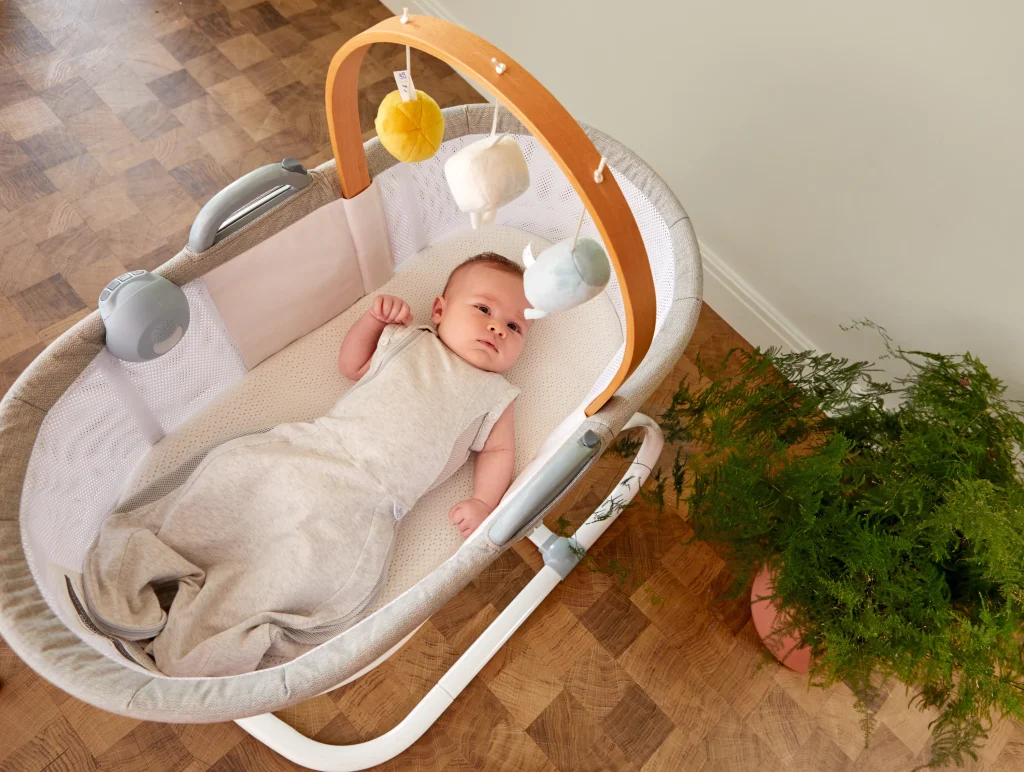
For parents living in compact urban apartments, the choice of a bassinet is often one of the first and most important decisions you will make. Because a bassinet occupies a prime piece of real estate in your bedroom and serves as your baby’s primary sleep space during those first crucial months, it needs to be as functional as it is safe.
In a smaller home, the challenge is twofold: finding a model that respects your limited square footage while ensuring that your baby’s sleep environment meets the highest safety standards. Here is how to navigate the options and make a choice that protects your little one while keeping your home organized.
1. Prioritize Firmness and Flatness
Regardless of the size, shape, or brand, the most important feature of any bassinet is a firm, flat sleeping surface. Infants do not need soft padding, thick foam, or decorative liners to be comfortable. In fact, these additions can be dangerous, potentially creating pockets where a baby could have trouble breathing or causing them to overheat.
When you are browsing through options, look for a mattress that is rigid and fits snugly against the sides of the bassinet with no gaps. If you can fit more than two fingers between the mattress and the frame, the fit is too loose and poses a safety risk. This standard is non-negotiable, whether you are buying new or using a hand-me-down. For a deeper understanding of why these specifications matter, our safe sleep guide provides a thorough breakdown of how to create a secure environment.
2. Size and Portability in Tight Quarters
One of the main benefits of a bassinet over a full-sized crib is its compact footprint. In a small apartment, you need a model that fits seamlessly into your room without impeding your ability to move around comfortably at night.
Look for models with a stable base but a streamlined design. Portability can also be a significant advantage in an apartment; being able to move the bassinet from the bedroom to the living area during the day allows you to keep your baby close while you tackle chores or handle other tasks. However, ensure that any wheels have a reliable, heavy-duty locking mechanism. If the bassinet is intended for mobility, verify that it meets the latest stability standards to ensure it won’t tip over on uneven apartment floors.
3. Breathability and Airflow
Urban apartments, particularly those in older buildings, can be prone to temperature fluctuations. A bassinet with breathable sides—such as mesh paneling—is often the superior choice. Mesh sides allow for optimal airflow, which is critical for regulating your baby’s temperature and ensuring they don’t overheat.
Furthermore, mesh sides offer you better visibility, allowing you to check on your baby quickly without having to get up or disturb them. When you are balancing urban baby safety in a space that serves multiple functions, this kind of visibility is a major plus for your own peace of mind.
4. Stability and Construction
In a cramped room, it is inevitable that someone—you, a pet, or another child—will occasionally bump into the bassinet. A sturdy base is essential. Avoid models that rely on lightweight or wobbly folding frames unless you are absolutely certain they are designed for long-term stability.
Before making your purchase, check the Consumer Product Safety Commission (CPSC) website for any known product safety issues related to the specific model you are considering. Even highly rated products can occasionally be subject to recalls, so doing your due diligence before you buy is a smart, proactive step.
5. Avoiding “Add-on” Clutter
It is easy to get distracted by “bells and whistles,” such as built-in mobiles, canopy shades, or hanging toys. While these might seem helpful or decorative, they are essentially clutter that takes up space and introduces potential hazards.
A safe bassinet setup is a simple one. The more “stuff” attached to the bassinet, the more you have to clean, monitor, and potentially move out of the way. Keep the environment as minimal as possible. By focusing on the structural integrity of the bassinet rather than the accessories, you simplify your life and maintain a safer space for your infant.
6. Integrating the Bassinet into Your Routine
Once you have chosen your bassinet, the way you use it is just as important as the model itself. In a small apartment, your bedroom often becomes a multi-use area.
- Mind the Cord: If you use a bassinet that requires a plug-in for features like vibration or light, ensure that the cord is securely tucked away and cannot be pulled into the sleep area.
- Manage the Surroundings: Keep the area around the bassinet free of chargers, medications, or personal items that could accidentally fall into the sleep space. These home safety basics are even more critical in tight living quarters where your personal belongings are naturally closer to the baby’s area.
7. When to Transition
All bassinets have a weight or developmental limit. Usually, once a baby starts rolling over or pushes up on their hands and knees, it is time to transition to a full-sized crib. Don’t be tempted to “stretch” the life of your bassinet beyond its manufacturer’s recommendations. Staying within these limits is vital for your baby’s safety as they become more active.
Making the Best Choice for Your Family
If you are feeling overwhelmed by the options, remember that you don’t need the most expensive model on the market to provide a safe sleep space. You need one that is sturdy, meets current safety standards, and fits your lifestyle.
If you have specific concerns about your apartment layout or need clarification on what to look for, don’t hesitate to check our FAQ page or contact us directly. We understand that every home is different, and we are here to support you in finding the best way to keep your little one safe and sound.
For ongoing tips on creating a secure, healthy, and happy home for your growing family, visit our blog and explore the wide range of resources available at the Infant Safety Guide home page.